
Happy summer solstice! Summer begins officially. We’re celebrating another summer at Seasonal Wisdom by sharing the news you need to know about the summer solstice — particularly old facts and folklore you probably didn’t know about this important day.
Vintage photo of children with pet is courtesy of chicks57 on Flickr.
So, What is the Summer Solstice?
Glad you asked, dear readers. The summer solstice is the longest day of the year. Around June 20 to June 21 in the Northern Hemisphere, the Sun reaches its farthest point north of the equator. The Sun is high in the sky, and the solar rays are striking Earth — in our part of the world — at a more direct angle than in winter.
At the North Pole, there are 24 hours of daylight north of the Arctic Circle (66.5° north of the equator), and the South Pole has 24 hours of night. That means in the Southern Hemisphere, it is now the winter solstice.
The word solstice is “from the Latin solstitium, from sol (sun) and stitium (to stop), reflecting the fact that the Sun appears to stop at this time (and again at the winter solstice),” explains The Old Farmer’s Almanac.
The magazine also tells why the summer solstice may be the longest day, but not the hottest.
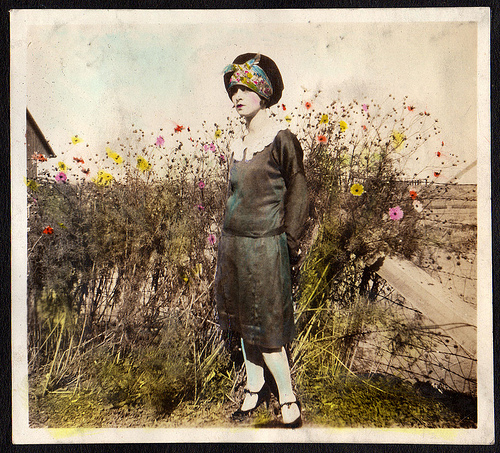
Vintage card of 1920s flapper among flowers, courtesy of QueenofTarts on Flickr.
A History of Celebrations
The longest day of the year has been revered since the earliest times, with ancient shrines like Stonehenge built to align with the summer solstice, explains Professor Christopher Whitcombe of Sweet Briar College.
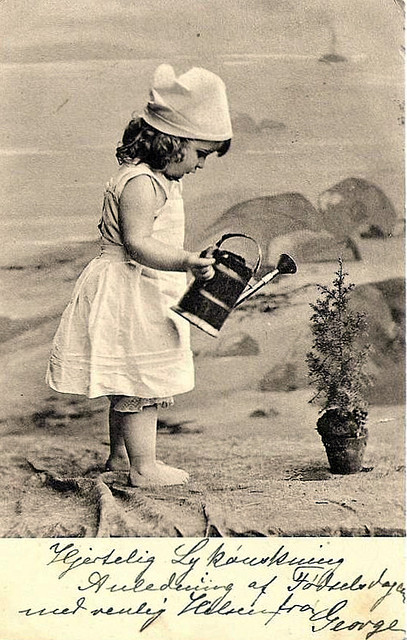
The solstice was later celebrated by all walks of life, including King Henry VIII of England, as well as all the country folk. Vintage card of little girl at beach, courtesy of chicks57 on Flickr.
As you’ll see in this Seasonal Wisdom post, the summer solstice was considered “midsummer” on many traditional calendars in the past. Not the beginning of summer, as it is now. Just ask William Shakespeare, who wrote A Midsummer Night’s Dream.
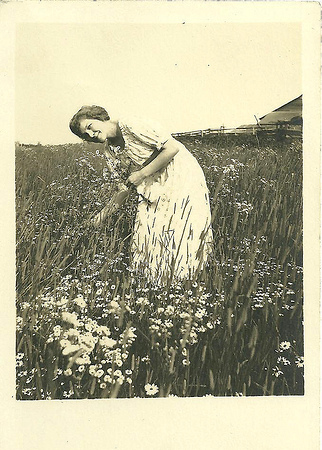
Even today, parts of Sweden, Austria and Germany still celebrate midsummer festivals around the summer solstice. Vintage greeting card of woman in meadow, courtesy of Curtis4x5 on Flickr.
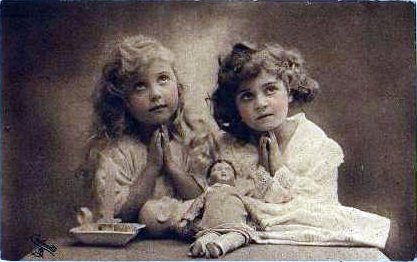
Learn more from Seasonal Wisdom about why the summer solstice was considered such a frightening time of year, and how people used flowers and plants to protect the home. Vintage photo of early-20th century little girls, courtesy of chicks57 on Flickr.

Have Fun! However you decide to celebrate the longest day of the year, take a moment to pay tribute to Mother Nature. Have a picnic lunch outside in the park. Buy yourself some flowers. Or pick a bouquet from your own garden. Chase lightning bugs in the meadow. Or, prepare a feast for friends with garden-grown or farm-fresh foods.
No matter where you are, Seasonal Wisdom wishes you a wonderful summer this year. How do you intend to celebrate this day?
Vintage photo collage is courtesy of jerseygal2009 on Flickr.
Learn More:

























{ 2 comments }
All the seasons have a special place in my heart, but my absolute favorite is summer. I am looking forward to picnics, beach fires and camping under the stars.
Happy Summer Solstice!
Gosh, June is flying by. Can’t believe it’s the solstice already. Great post.
Comments on this entry are closed.
{ 2 trackbacks }